

A forecast for 2026 requires rejecting the idea of a single statewide outcome. North Carolina housing behaves as a collection of regional markets, each responding differently to interest rates, construction pipelines, job growth, and migration patterns.
Charlotte behaves differently from Raleigh. Durham diverges from Greensboro. Secondary markets develop their own logic.
The analysis below presents a deep, data-grounded forecast for the North Carolina housing market in 2026.
Statewide Housing Market Conditions Entering 2026
North Carolina housing conditions entering 2026 show stabilization rather than contraction. Statewide averages hide volatility, yet several themes remain consistent.
Zillow data places the average home value in North Carolina at approximately $327,663, representing a year-over-year decline of about 0.6 percent entering early 2026. That figure reflects cooling from prior growth rather than systemic weakness.
Sales activity remains below peak levels, but no longer collapses year over year. Inventory expands gradually as homeowners adjust to a higher rate reality and new construction continues in growth corridors.
Key Statewide Characteristics
- Prices trend flat to mildly positive in most regions
- Inventory increases without flooding the market
- Sales volume recovers slowly rather than sharply
- Market power is distributed more evenly between buyers and sellers
Housing in 2026 rewards accuracy. Overpricing fails quickly. Correctly positioned homes still transact.
Mortgage Rate Outlook And Its Impact In 2026
Mortgage rates remain the primary constraint on housing activity throughout 2026. Forecasts from major housing and financial institutions show tight clustering.
| Source | 2026 Expected Range |
| Mortgage Bankers Association | 6.2% to 6.3% |
| Realtor.com | Around 6.3% |
| Freddie Mac early 2026 reading | About 6.1% |
| Fannie Mae’s year-end expectation | Approximately 5.9% |
Rates at these levels allow market movement, though they cap enthusiasm.
How Rates Shape Buyer Behavior
Buyers in 2026 focus heavily on payment math. Small rate changes alter affordability significantly.
Common buyer responses include:
- Lower target purchase prices
- Greater interest in rate buydown incentives
- Longer decision timelines
- Increased scrutiny of the condition and maintenance
Demand remains present. Demand becomes selective.
Inventory And Supply Dynamics In North Carolina
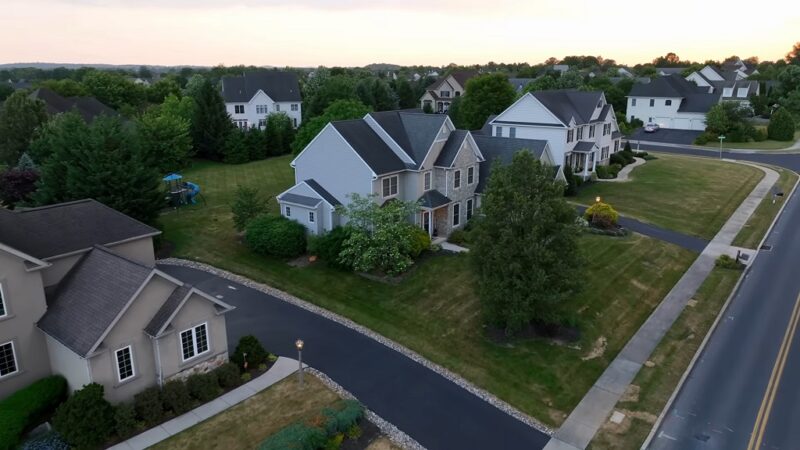
Inventory conditions improve meaningfully during 2026 compared to earlier years, though the improvement varies by location.
Existing Home Inventory
Many homeowners retain mortgages below four percent. Selling carries a financial penalty. Listings occur primarily due to life changes rather than market timing.
This lock, in effect, limits resale supply even as inventory improves.
New Construction Supply
Builders remain active near major metros, particularly Charlotte, Raleigh, Durham, and Greensboro.
Builder incentives play a growing role:
- Temporary mortgage rate buydowns
- Closing cost assistance
- Upgrade credits
These incentives affect buyer comparisons, especially when evaluating resale homes.
Migration Trends Supporting Demand
North Carolina remains one of the strongest domestic migration states entering 2026.
Census-based data indicate the state added over 100,000 residents between 2023 and 2024, including approximately 82,000 net domestic migrants. Migration remains a core demand driver.
Migration Profiles
- Remote workers relocating from higher-cost states
- Professionals in healthcare, technology, and life sciences jobs
- Retirees seeking tax stability and healthcare access
Migration supports demand but does not eliminate affordability sensitivity.
Raleigh Housing Market Forecast For 2026
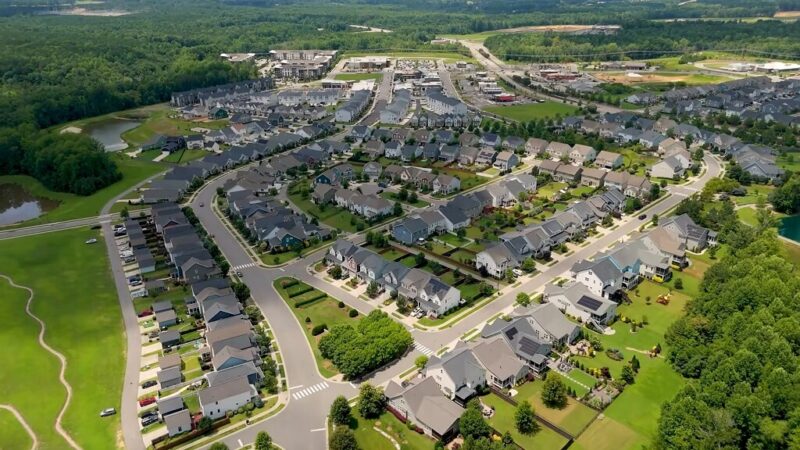
Raleigh shows one of the clearest signs of market cooling.
Raleigh Price Forecast
Realtor.com projects a price decline of roughly 3.7 percent during 2026.
Raleigh Sales Forecast
Sales volume declines by approximately 4.4 percent year over year.
Raleigh Market Interpretation
Inventory growth meets affordability limits. Buyers resist premium pricing. Homes that require updates face longer market times.
Durham Chapel Hill Housing Market Forecast For 2026
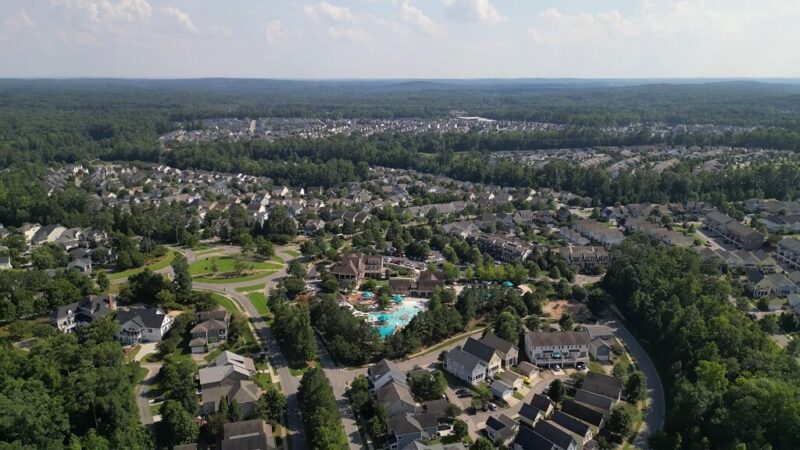
Durham and Chapel Hill displays greater balance.
Prices show projected growth of approximately 2.9 percent.
Sales volume increases by about 1.0 percent.
Supply constraints and employment stability support moderate growth.
Greensboro High Point Housing Market Forecast For 2026
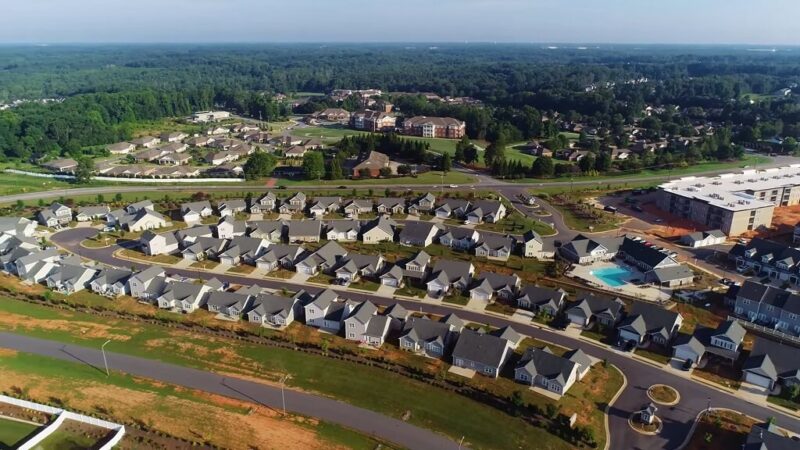
Greensboro and High Point show a mixed signal.
Prices rise approximately 4.4 percent.
Sales volume declines sharply, by roughly 10.9 percent.
Limited inventory supports prices even as transaction activity slows.
Winston Salem Housing Market Forecast For 2026
Winston-Salem stands out for price resilience.
Prices rise approximately 7.7 percent.
Sales volume remains nearly flat, declining only 0.2 percent.
Supply remains tight. Value-oriented buyers sustain demand.
| Metro Area | Price Change 2026 | Sales Change 2026 |
| Charlotte | +1.1% | -2.4% |
| Raleigh | -3.7% | -4.4% |
| Durham Chapel Hill | +2.9% | +1.0% |
| Greensboro High Point | +4.4% | -10.9% |
| Winston Salem | +7.7% | -0.2% |
Buyer Behavior In A Normalizing Market
Buyers in 2026 act with caution rather than urgency.
Buyer Priorities
- Payment predictability
- Structural condition
- Location quality
- Long-term operating costs
Inspection results influence negotiations heavily.
How Can Sellers Actually Increase Value

By 2026, the market stops forgiving neglect.
When a home is listed, showings begin, and feedback from buyers often follows a familiar pattern.
Many buyers indicate that the asking price feels too high relative to condition, which raises concerns and leads to hesitation rather than offers.
Renovations That Influence Buyers
Buyers respond to improvements that reduce uncertainty.
High Impact Improvements
- Kitchen updates focused on lighting, hardware, and surfaces, for example, thin brick floors with tiles from Real Thin Brick
- Bathroom refreshes emphasizing cleanliness and modern fixtures
- Flooring replacement where wear dominates first impressions
- Exterior paint and curb appeal improvements
Projects With Limited Return
- Highly customized finishes
- Luxury upgrades are unsupported by neighborhood pricing
- Expensive additions without comparable sales
Presentation And Staging
Neutral presentation widens appeal. Clean spaces photograph better. Buyers imagine ownership more easily.
Long-Term Outlook Beyond 2026
North Carolina retains strong housing fundamentals.
Population growth, employment diversity, and geographic appeal support long-term stability. Short-term fluctuations reward preparation and realism rather than speculation.
Conclusion
The North Carolina housing market in 2026 behaves like a functioning market again.
Prices change at different speeds depending on location, while inventory increases in some areas more than others. Buyers approach purchases with careful financial calculations, and sellers who prepare properly and price realistically tend to achieve better results.
Forecasts point toward moderation rather than drama. Local conditions override statewide headlines. Homes priced accurately and presented well continue to sell. Homes relying on past momentum struggle.
That reality defines the North Carolina housing market forecast for 2026.
References
- Zillow
North Carolina Home Values
https://www.zillow.com/home-values/36/nc/
- Realtor.com
2026 National Housing Forecast
https://www.realtor.com/research/2026-national-housing-forecast/
- Realtor.com
2026 Housing Forecast: 100 Largest U.S. Metros RankedRealtor.com 2026 Housing Forecast: 100 Largest U.S. Metros (Ranked)
- Mortgage Bankers Association
Mortgage Finance Forecast, January 2026
https://www.mba.org/docs/default-source/research-and-forecasts/forecasts/2026/mortgage-finance-forecast-jan-2026.pdf
- Fannie Mae
Mortgage Rates Expected to Move Below 6 Percent by End of 2026
https://www.fanniemae.com/newsroom/fannie-mae-news/mortgage-rates-expected-move-below-6-percent-end-2026
- Freddie Mac
Primary Mortgage Market Survey
https://www.freddiemac.com/research/pmms
- Alliant National
North Carolina Market Outlook 2026
https://alliantnational.com/wp-content/uploads/2026/01/North_Carolina_Market_Outlook_2026.pdf
- U.S. Census Bureau
State to State Migration Data
https://www.census.gov/data/tables/time-series/demo/geographic-mobility/state-to-state-migration.html